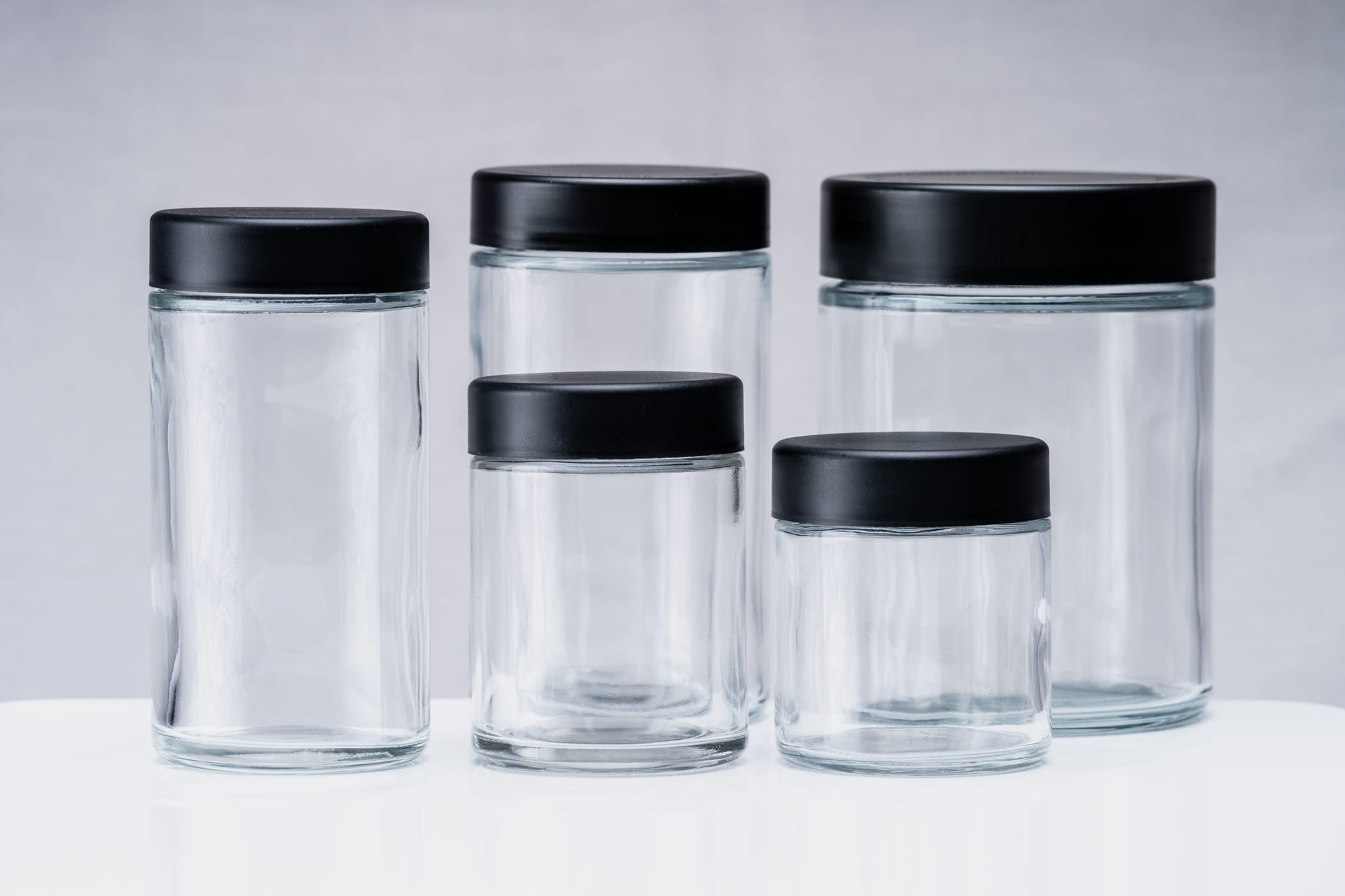
Child-resistant cannabis packaging is one of the most important compliance checkpoints for cannabis brands, dispensaries, and processors purchasing packaging wholesale.
As cannabis markets mature and compliance oversight increases, packaging decisions now influence:
- Regulatory compliance
- Consumer safety
- Operational efficiency
- Brand credibility
Understanding how child resistant cannabis packaging works — including testing standards, closure mechanisms, and documentation requirements — helps brands reduce regulatory risk while improving packaging reliability.
This guide explains the practical considerations behind child resistant jars, child resistant glass jars, PPPA testing standards, and what cannabis brands should request from packaging suppliers.
What “Child-Resistant” Really Means
Child-resistant packaging is designed to be significantly difficult for children under five years old to open within a reasonable amount of time while still allowing adults to open and properly resecure the package.
Importantly, child-resistant does not mean child-proof.
Most cannabis regulations reference the Poison Prevention Packaging Act (PPPA), which defines performance standards for child-resistant packaging.
In practical terms, compliance usually applies to the entire packaging system:
- The container
- The closure
- The tested configuration as sold
A cap alone is not considered compliant unless it has been tested with the specific container configuration used in production.
For a broader overview of cannabis packaging regulations and strategy, see
The Complete Guide to Cannabis Packaging in 2026.
PPPA Testing and 16 CFR 1700.20 Basics
Most claims related to child-resistant cannabis packaging rely on performance testing aligned with 16 CFR §1700.20, the testing protocol referenced under the PPPA.
Testing evaluates whether packaging performs correctly for both children and adults.
Child Panel Testing
Child-panel testing evaluates whether children can open a package within a defined time window.
Key takeaways for packaging buyers:
- Testing applies to a specific package configuration
- Results depend on standardized panel outcomes
- Small design changes may invalidate previous test results
Adult Panel Testing
Adult testing confirms that the package can be opened and properly reclosed by adults.
This is important because packaging that is too difficult for adults can lead to:
- Consumer frustration
- Improper resealing
- Product degradation
- Higher return or complaint rates
Why Exact Package Matching Matters
Documentation should match the exact packaging configuration being used.
Factors that may affect compliance include:
- Jar thread finish
- Closure mold design
- Liner materials
- Material differences such as plastic vs glass
This is particularly important when sourcing child resistant jars or child resistant glass jars.
Common Child-Resistant Closure Mechanisms
Child-resistant packaging uses several mechanical systems to restrict access.
Understanding the mechanism helps brands select packaging that works well operationally and for consumers.
Push-and-Turn Closures
Push-and-turn closures are one of the most widely used systems for child resistant jars.
They work by requiring downward pressure while twisting the cap.
Benefits include:
- Familiar consumer interaction
- Compatibility with flower and edible jars
- Availability in multiple diameters
However, correct torque and compatible threads are essential for reliable performance.
Squeeze-and-Turn Closures
Squeeze-and-turn designs require users to pinch designated areas of the closure while rotating.
These systems are common in both jars and tubes.
Advantages include:
- Compact designs
- Good usability for many adult consumers
- Compatibility with smaller packaging formats
Tab-Lock or Press-Release Systems
Some premium cannabis packages use tab-release locking mechanisms.
These systems can provide:
- Strong mechanical locking
- Premium design differentiation
- Distinct opening actions
However, molding quality and material durability become critical with these systems.
Pre-Roll Tube Mechanisms
Many compliant pre-roll packages rely on squeeze-top or push-and-turn closures.
Brands scaling pre-roll production should evaluate
pre-roll tubes designed for freshness protection and PPPA-aligned child-resistant performance.
Child Resistant Jars vs Child Resistant Glass Jars
Cannabis brands frequently evaluate plastic and glass packaging when selecting compliant containers.
Why Brands Choose Child Resistant Glass Jars
Child resistant glass jars are popular because they support:
- Premium shelf presence
- High product visibility
- Chemical stability
- Excellent compatibility with flower and concentrates
Glass packaging is especially common for premium product lines.
Why Brands Choose Plastic Child Resistant Jars
Plastic containers often appeal to brands prioritizing operational efficiency.
Advantages include:
- Lower shipping weight
- Reduced breakage risk
- Durability in distribution
- Lower cost at high volumes
Compatibility Matters More Than Material
Whether plastic or glass is used, the most important factor is ensuring the cap and container function together as a tested configuration.
Explore available compliant options within
cannabis jar packaging.
Tamper-Evident Cannabis Packaging
Child-resistant packaging and tamper-evident packaging serve different purposes.
- Child-resistant: difficult for children to open
- Tamper-evident: shows visible evidence of opening
Common tamper-evident solutions include:
- Shrink bands
- Tear bands
- Breakaway rings
- Induction seals
- Security labels
Many state cannabis programs require both features.
What Brands Must Document
Cannabis brands should maintain clear documentation for all packaging configurations used in production.
Typical records include:
- Child-resistant test documentation
- Packaging specifications tied to SKUs
- Opening instructions
- Lot traceability records
- Supplier change notifications
What to Ask Your Packaging Supplier
Ask suppliers for:
- PPPA or 16 CFR 1700.20 test documentation
- Certification tied to the exact container-closure configuration
- Container and closure specifications
- Recommended torque ranges
- Liner and material specifications
- Quality control documentation
- Lot traceability procedures
- Change notification policies
- Tamper-evident compatibility options
Best Practices for Cannabis Packaging Buyers
Brands sourcing packaging wholesale can reduce compliance risk by standardizing packaging systems across product lines.
Recommended steps include:
- Use a limited number of approved CR packaging configurations
- Request documentation before placing large purchase orders
- Conduct line trials before production launches
- Maintain organized packaging documentation files
- Require supplier notification for packaging changes
Frequently Asked Questions
Are child-resistant and tamper-evident packaging the same?
No. Child-resistant packaging restricts access by children, while tamper-evident packaging shows visible evidence if a package has been opened.
Do child resistant jars have to be glass?
No. Both plastic and glass containers can be compliant when paired with the appropriate tested closure.
Can a PPPA-tested cap be used on any jar?
Not necessarily. Child-resistant documentation typically applies to the exact container-closure configuration that was tested.
What documentation should cannabis brands keep?
Brands should maintain packaging specifications, CR test documentation, opening instructions, traceability records, and supplier change notifications.
Why are child resistant glass jars popular?
They combine strong product visibility, chemical stability, and premium shelf presence.
Need Child-Resistant Cannabis Packaging?
If you’re sourcing compliant packaging for flower, concentrates, or pre-rolls, Innovative Sourcing offers a wide range of compliant solutions designed for wholesale cannabis operations.
Explore:
Cannabis packaging solutions →
or