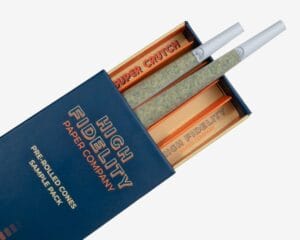
The Complete Guide to Cannabis Packaging in 2026 is designed to help cannabis brands streamline operations, elevate brand presence, and confidently navigate evolving regulatory requirements.
As cannabis markets mature and competition intensifies, packaging has become a critical driver of:
- Regulatory compliance
- Product protection
- Consumer safety
- Brand differentiation
Whether you’re scaling pre-roll production, upgrading flower jars, or optimizing concentrate packaging, selecting the right packaging solutions ensures long-term compliance and operational efficiency.
Pre Roll Packaging: Compliance Meets Brand Presentation
Pre rolls continue to dominate retail sales, increasing demand for packaging that blends compliance, freshness retention, and brand presentation.
- Compliance and child safety
- Aroma and freshness retention
- Crush-proof protection
- Clear, adult-focused branding
Child-Resistant Requirements for Pre Rolls
All cannabis products intended for adult consumers must meet federal child-resistant (CR) performance standards under the
Poison Prevention Packaging Act (PPPA) and Consumer Product Safety Commission (CPSC).
Packaging must pass standardized testing outlined in 16 CFR §1700.20, including child-panel and adult-panel testing procedures.
Most states adopt these standards directly or incorporate them into cannabis-specific rules. States may also require:
- Opaque or non-transparent packaging
- Universal THC symbols
- State-specific warning language
- Tamper-evident features
Pre Roll Tubes: Freshness, Protection & CR Performance
Pre roll tubes remain the industry standard because they:
- Preserve terpene integrity through airtight sealing
- Provide durable crush-resistant protection
- Support tamper-evident mechanisms
- Meet PPPA-aligned child-resistant performance requirements
- Offer sufficient surface area for required labeling
Compliant mechanisms often include squeeze-top or push-and-turn closures.
Important 2026 Update for Hemp Pre Rolls
Beginning November 12, 2026, federal hemp definitions are expected to shift under pending appropriations legislation.
The proposed change introduces a 0.4 mg total THC per container limit, which could affect:
- Package sizing
- Potency labeling
- SKU structure
- Certificate of Analysis alignment
Brands should begin reviewing container sizes and label math now to prepare.
Concentrate Jars: Airtight Seals for Maximum Potency
Premium concentrate consumers expect purity, potency, and a high-end experience.
Concentrate jars support these expectations through:
- Airtight closures to reduce oxidation
- Child-resistant mechanisms for multi-dose formats
- Tamper-evident features
- Labeling panel compatibility
Glass concentrate jars are particularly popular due to chemical stability and premium shelf presence.
Flower Jars: Premium Branding & Long-Term Storage
Flower jars must preserve aroma, moisture balance, and product structure — while also representing brand identity on the shelf.
Explore available options in
cannabis jar packaging.
Regulatory Considerations
- Opaque or partially opaque jars in certain categories
- Child-resistant lids
- Clear display of potency, batch numbers, warnings, and universal THC symbols
Why Child-Resistant Packaging Still Matters in 2026
Child-resistant compliance remains one of the most strictly enforced regulatory pillars in cannabis.
Federal Basis
- At least 85% of children in testing panels must be unable to open the package
- Adults must be able to open and properly resecure the packaging
State Enforcement Trends
- Candy-like or youth-appealing designs are prohibited
- Misleading imagery is restricted
- Bright characters that attract minors are banned
- Non-compliant labeling panels are subject to enforcement
Labeling Requirements Every Brand Must Meet
- State-specific universal THC symbol
- Potency (mg per serving and mg per package)
- Batch and lot numbers
- Manufacturing and expiration dates
- Mandatory warning statements
- Proper principal display panel formatting
Avoid unproven health claims. Regulatory agencies continue enforcement against unsupported therapeutic marketing.
Major 2026 Packaging Developments to Watch
1. Federal Hemp Redefinition
- Packaging redesigns
- Smaller pack sizes
- Updated potency label calculations
2. New York PLMA Updates
- Expanded CR and tamper-evident requirements
- Sustainability documentation requirements
- Youth-appealing design restrictions
- Phased implementation timelines
3. California DCC Packaging Updates
- Retail-ready packaging checklists
- Universal symbol usage
- Label panel formatting refinements
4. PFAS Reporting Requirements (EPA TSCA §8(a)(7))
Companies using PFAS-containing materials in packaging, inks, adhesives, or device components must report between
April 13 and October 13, 2026.
This is accelerating demand for PFAS-free packaging alternatives.
Action Steps for Cannabis Brands in 2026
- Follow the strictest state standards (California and New York)
- Maintain documented CR certifications
- Design modular labels adaptable across states
- Audit hemp SKUs for total-THC compliance
- Request supplier documentation for PFAS declarations
Need Compliant Cannabis Packaging in 2026?
Staying compliant is only half the equation — choosing the right supplier is just as critical.
If you’re sourcing:
- Cannabis packaging solutions
- Pre roll tubes wholesale
- Concentrate jars wholesale
- Child resistant glass jars
- Custom cannabis packaging
- Cannabis mylar bags
Explore our full range of compliant cannabis packaging designed to meet federal PPPA standards and evolving state-level regulations.